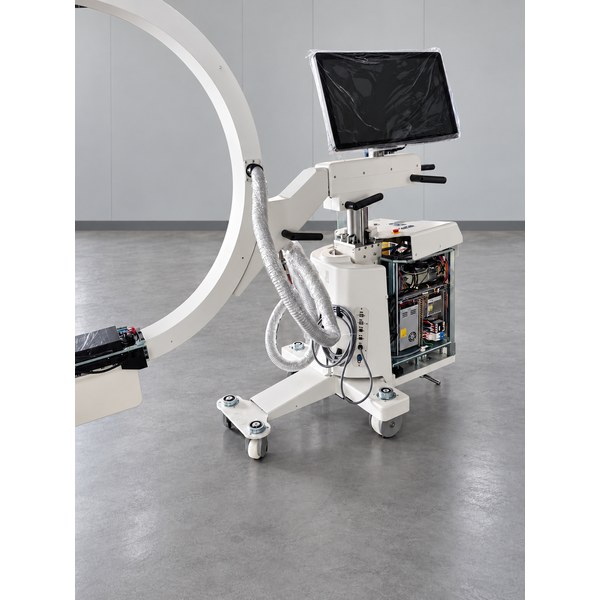
Precision Sheet Metal Parts: RFQ Checklist for OEM Buyers
Related CNC Quotation Guide
For machined parts, read CNC Machining Quotes: Why 2D Drawings and 3D Models Matter.
Small sheet metal parts often perform several functions within a piece of equipment. A bracket supports a component, a panel positions connectors, and an enclosure provides protection while allowing access for assembly and maintenance.
A clear sheet metal RFQ checklist helps buyers communicate the drawings, materials, tolerances and finishing requirements behind a fabrication quote. For small precision sheet metal parts, the RFQ should also identify the features that control fit and assembly, such as hole positions, folded faces and hardware locations.
Kianzee supports custom sheet metal panels, brackets, covers, equipment housings and related assemblies for industrial and medical equipment projects. This guide explains the information to prepare when sourcing small precision sheet metal parts.
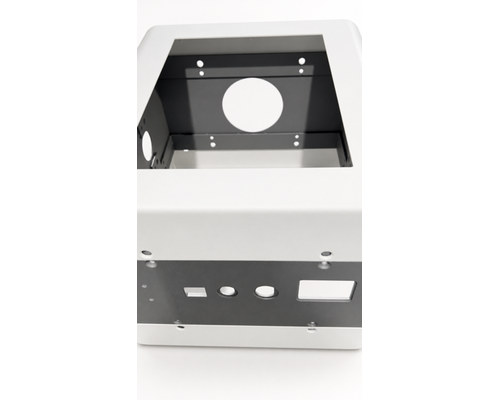
Sheet metal enclosure showing its overall structure and cutouts.
1. Provide Drawings and Identify Critical Features
Send the available 2D drawings and 3D models with matching revision numbers. The drawings should define dimensions, tolerances, material and surface finish requirements.
For small parts, identify the features that affect installation or assembly, such as:
• Mounting holes and their positions.
• Slots and connector openings.
• Distances between folded surfaces.
• Mating edges and assembly clearances.
• Threaded holes and hardware locations.
For example, a connector panel may need its openings positioned accurately relative to the mounting holes. A bracket may require a controlled distance between two bent faces so
that the supported component fits correctly.
Marking these relationships helps focus manufacturing and inspection on the dimensions that matter most.
Photos and samples can provide useful context, particularly for an existing part. Where drawings are incomplete, identify any dimensions or interfaces that still need confirmation.
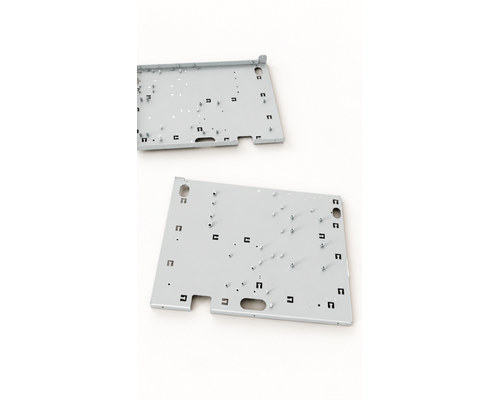
Sheet metal panels with cutouts, mounting posts and formed edges.
2. Specify the Material Grade and Sheet Thickness
State the material grade and sheet thickness for each part. These affect forming, weight, stiffness, corrosion resistance and the available finishing options.
If the material has not yet been selected, describe the operating environment and the part’s function. Relevant information may include indoor or outdoor use, exposure to moisture, cleaning requirements and the load the component must support.
Material selection and any proposed substitutions should be agreed before production. If material documentation is required, include that requirement in the RFQ.
3. Describe the Required Surface Finish
Surface finishing is an important part of the specification, especially for visible covers, panels and equipment enclosures.
The RFQ should identify the required finish and the areas to which it applies. Depending on the material and application, this may involve powder coating, electroplating, anodizing or another specified treatment.
For coated parts, provide the colour reference, texture and gloss requirements where applicable. Also identify any areas that must remain free of coating, such as threads, electrical contact points or mating surfaces.
A simple description such as “white finish” may leave room for different interpretations. A defined colour reference and an approved finish sample provide a clearer basis for production.
For appearance-sensitive parts, mark the visible surfaces and state the acceptance requirements for scratches, marks and other cosmetic features. These requirements should be reviewed alongside packaging arrangements.
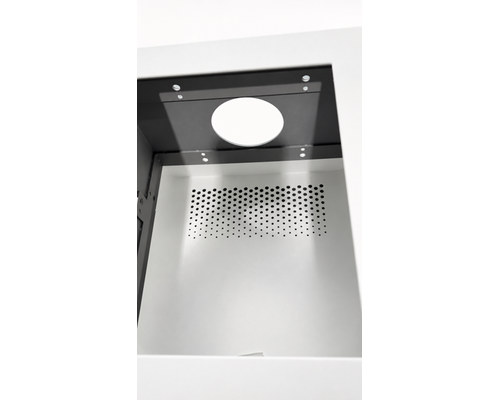
Enclosure interior with ventilation holes and mounting features.
4. Include Hardware and Assembly Details
Clarify whether the order covers separate fabricated parts or an assembled component.
Where hardware is required, specify the type, size, quantity and location. This may include threaded inserts, nuts, studs, hinges or other fasteners. Provide part references when a particular hardware item is required.
Identify which hardware and accessories the supplier should provide and which will be supplied by the customer. For multi-part assemblies, include a parts list so that each item is accounted for in the quotation.
For assemblies, include an assembly drawing or an exploded view showing how the parts fit together. Identify any welding, fastening or final fitting requirements.
This helps the supplier account for the complete scope and reduces the chance of receiving parts that still need unplanned work before installation.
5. State Prototype and Production Quantities
Provide the quantity required for the initial order and, where available, the expected repeat-order volume.
A prototype request may focus on checking fit, function and appearance. Repeat production also requires consistent drawings, agreed inspection points and suitable packaging.
If the project will move through several stages, state them separately—for example, an initial sample quantity followed by a planned production batch. This allows the quotation to reflect the requirements of each stage.
Include the required delivery date and destination, and identify any difference between the prototype schedule and later production batches. This helps the supplier review manufacturing and delivery requirements alongside the order quantity.
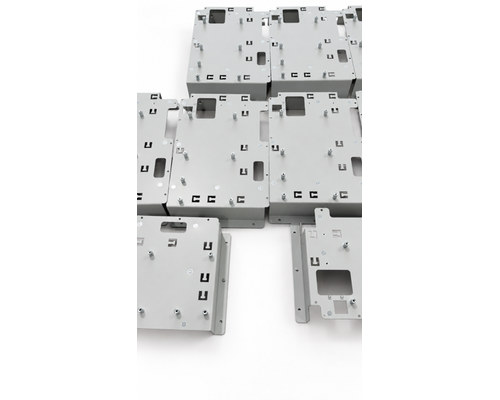
Batch of sheet metal panels with mounting features.
6. Define Inspection and Packaging Requirements
Identify the dimensions and features that need inspection, together with any required records or reports.
For an enclosure, these may include overall dimensions, mounting-hole positions and the fit between the cover and base. For a bracket, the main inspection points may be hole spacing, bend angle and the relationship between mounting faces.
Packaging should also match the part. Finished surfaces may need individual protection, while thin panels or projecting features may need support to prevent damage during transport.
Include any requirements for part identification, batch separation or labels before the quotation is confirmed.
A Quick Sheet Metal RFQ Checklist
• Available 2D drawings and 3D models with matching revisions.
• Material grades, sheet thicknesses and critical tolerances.
• Finish specifications, visible surfaces and masking requirements.
• Hardware, assembly drawings and supply responsibilities.
• Prototype and production quantities, required date and destination.
• Inspection records, identification and packaging requirements.
Send Your Small Sheet Metal Parts RFQ to Kianzee
To begin a project review, send your drawings or available product information, material and thickness requirements, order quantity, surface finish specifications and assembly details.
Kianzee can review the fabrication, finishing and assembly scope with you and clarify the information needed for quotation.
Explore Our Sheet Metal Fabrication Capabilities
Contact: Giselle Kong
Email: [email protected]
WhatsApp: +86 158 5291 7337